
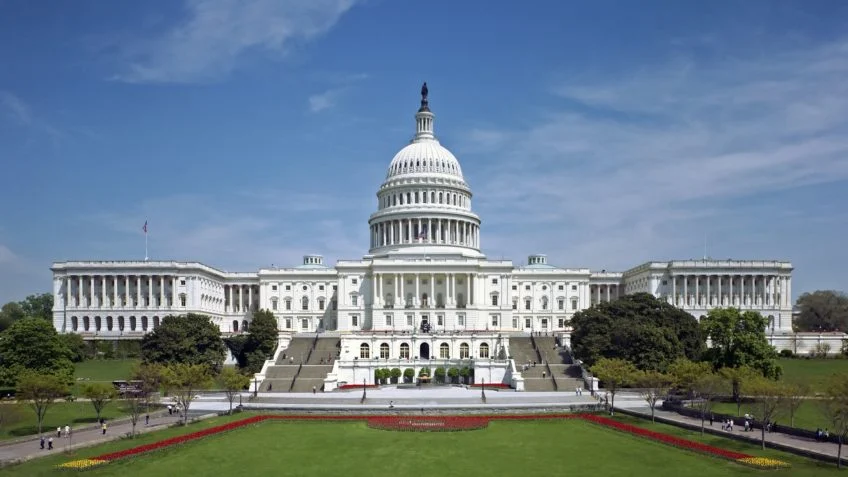
U.S. President Donald Trump and his Democratic rivals made progress during a White House meeting to prevent a government shutdown, which could impact various services starting on Wednesday.
Both parties traded blame for who would be accountable if Congress does not extend government funding past Tuesday night.
Vice President JD Vance stated that he believes a shutdown is imminent, as reported by Investng.
The Democrats believe that any deal should include the extension of soon-to-expire health benefits, while Republicans maintain that health and budget issues should be addressed independently. Senate Democratic leader Chuck Schumer emphasized that there are significant disagreements between the two parties.
If an agreement is not reached, numerous federal employees from various agencies within the U.S. government could face dismissal, impacting operations ranging from NASA to national parks. This could lead to service disruptions, potential closures of federal courts, and delays in providing subsidies to small businesses.
Budget disputes are a common occurrence in Washington and are typically resolved at the eleventh hour. However, Trump’s readiness to disregard Congress-approved spending legislation introduces a fresh element of unpredictability. The president has declined to allocate billions of authorized funds and has warned of possible extensive staff cuts if a shutdown transpires. As of now, only a limited number of agencies have outlined strategies for addressing this situation.
In August, inflation in the US increased as expected, according to the PCE index.
The main component of the US inflation PCE index, which does not include food and energy, increased by 0.2% in August, meeting forecasts, following a peak of 0.3% in July, according to the Department of Commerce’s report on Friday (26).
The complete index of the PCE increased by 2.7% during the month.
The PCE is the Federal Reserve’s favored indicator for making monetary policy decisions.
Consumer expenditure increased by 0.4% in August, surpassing the market prediction of 0.2%, primarily due to affluent families, who were positively impacted by strong stock markets and elevated real estate prices.
- Economic situation
- Global
- Donald Trump
- The United States of America

